Education plays a crucial role in fostering personal and social development, as well as economic growth. Government policies play a dominant role in this sector. Over time, trade in education services, particularly at the tertiary level, have been growing in importance. Driving factors include a combination of demographic changes, technological developments, national development goals, and […]
 My presentation draws on my twenty years of experience as trainer, expert, consultant and university professor with special focus on management and leadership training for private and public sector organizations in Europe, Asia, Africa and North America as well as for almost all of the UN organizations and specialized agencies.
Book chapter in “European Diplomacy: Regional Cooperation, Lifelong Learning and Diplomatic Training”, Diplomatic Academy Proceedings, Vol.8, Nr1, 2011, Diplomatic Academy, Zagreb, Republic of Croatia.
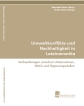 This book titled « Environmental conflicts in Latin America” offers in –depth analysis of environmental conflicts from a multi-stakeholder perspective in Latin American countries such as Brazil, Columbia, Chile-Argentina and Columbia-Ecuador. The case examples offer analyses based on established negotiation theory and show actors such as governments, transnational companies, NGOs and civil society engage in negotiations covering water rights, gas and oil extraction, natural reservations (indigenous people rights versus enterprises’ construction projects). (The book is in German)
The aim of this evaluation of the activities fostering the Geneva Initiative was to document the work that has been done by Israeli, Palestinian and other parties in the context of the Geneva Initiative and to re-examine the Swiss financial and non-financial support of it. The report is being made available with the permission of the Swiss Federal Ministry of Foreign Affairs.
The Doha Development Agenda (DDA) launched in 2001was supposed to achieve further trade liberalisation while at the same time taking into account the needs of developing countries. Ten years have passed since its inception. No end of the Round is in sight and the possibility of a full failure looms in the background. This policy note addresses the following questions: Why does the DDA seem to evolve towards failure? What could be done to rescue the Doha Round?
Saner, Raymond & Yiu, Lichia: (2011) Sustainable transborder business cooperation in the European regions: the importance of social entrepreneurship, Edward Elgar Publ., Cheltenham, UK • Northampton, MA, USA
CSEND founders conducted research and wrote draft document for the WHO on intersectoral action for health. The publication goes back to the 1986 but is fully relevant for today’s health sector of all countries, developed or developing.
The internationalization of education services is a politically contested subject. Trade in education is debated between market liberalizers and protectionists and is played out within countries and their different stakeholders, for example between government ministries (e.g. ministry of trade versus ministry of education) and between government and the private sector (privately owned schools versus publically run schools). A balance needs to be struck between consumer protection and the rights of governments to pursue high quality education without falling into the trap of closing market access to foreign education service providers.
Negotiations at WTO and UNFCCC are both in limbo putting at risk international cooperation in key sectors of world development. International governance options are urgently needed to strengthen multilateral negotiations at the WTO and UNFCCC to avoid full deadlock and possible major trade and environmental conflicts. This policy brief written in June 2011 offers solutions which are not “WTO-UNFCCC speak” but rather based on “out of the box thinking”.
This contribution focuses on the drivers, determinants and policy implications of low-carbon FDI, with particular attention to developing countries. Parts of this paper served as an input to Chapter IV of the World Investment Report 2010, which examined the issue of TNCs and Climate Change. The authors are however free to use all of the reflections presented below for their own publications.