
Raymond Saner, 5th July 2013
Radical new approaches are urgently needed to reverse climate warming and to prevent the world from committing “ecocide” through environmental destruction. The radical new solutions proposed in this policy study go beyond the incremental change of current policy practice and instead suggest the need for a discontinuous change as the only means of halting the pervasive “tinkering along” approach of mainstream policy making which have not been able to bring about a halt to climate warming. This policy paper assesses the various attempts of state and non-state actors to cope with climate change and argues that a radically new approach is needed within the WTO agreements to generate solutions that have sufficient weight and treaty power to bring about a new and credible approach towards halting and reversing of climate warming.
Building on previous analysis and recommendations, this policy study discusses the interface between multilateral agreements on trade and on climate change and suggests that the WTO is the only multilateral institution which can effectively generate legal constraints and political will to stop climate warming. This policy study proposes an intra-regime solution within the WTO agreement in order to elicit the green investments and green production needed to successfully implement climate change mitigation and adaptation.
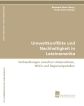 This book titled « Environmental conflicts in Latin America” offers in –depth analysis of environmental conflicts from a multi-stakeholder perspective in Latin American countries such as Brazil, Columbia, Chile-Argentina and Columbia-Ecuador. The case examples offer analyses based on established negotiation theory and show actors such as governments, transnational companies, NGOs and civil society engage in negotiations covering water rights, gas and oil extraction, natural reservations (indigenous people rights versus enterprises’ construction projects). (The book is in German)
Negotiations at WTO and UNFCCC are both in limbo putting at risk international cooperation in key sectors of world development. International governance options are urgently needed to strengthen multilateral negotiations at the WTO and UNFCCC to avoid full deadlock and possible major trade and environmental conflicts. This policy brief written in June 2011 offers solutions which are not “WTO-UNFCCC speak” but rather based on “out of the box thinking”.
This contribution focuses on the drivers, determinants and policy implications of low-carbon FDI, with particular attention to developing countries. Parts of this paper served as an input to Chapter IV of the World Investment Report 2010, which examined the issue of TNCs and Climate Change. The authors are however free to use all of the reflections presented below for their own publications.
Niederberger, A.A. & Saner, R. 2005. Exploring the relationship between FDI flows and CDM potential. Transnational Corporations, 14 (1): 1-40

- Negotiating environmental conflicts: Economic, sociological, and legal aspects of environmental negotiations in the Alpine region
- Stakeholder Analysis of Trans-Border Regional Cooperation on Environmental Protection in Northeast Asia
- Climate Change and Environmental Negotiations: Global and Local Dynamics